OpenTypeless vs Windows Voice Typing
Start with Windows + H for built-in text entry. OpenTypeless adds configurable provider and polishing routes. Neither comparison should confuse Windows voice typing with Voice Access for hands-free control.
OpenTypeless product UI
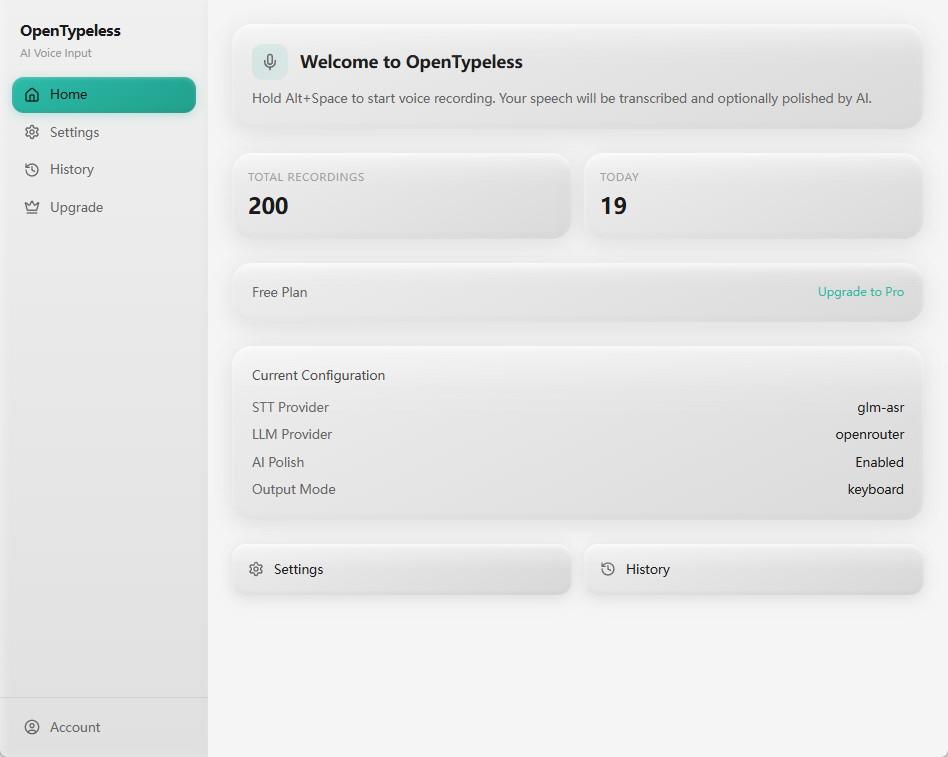
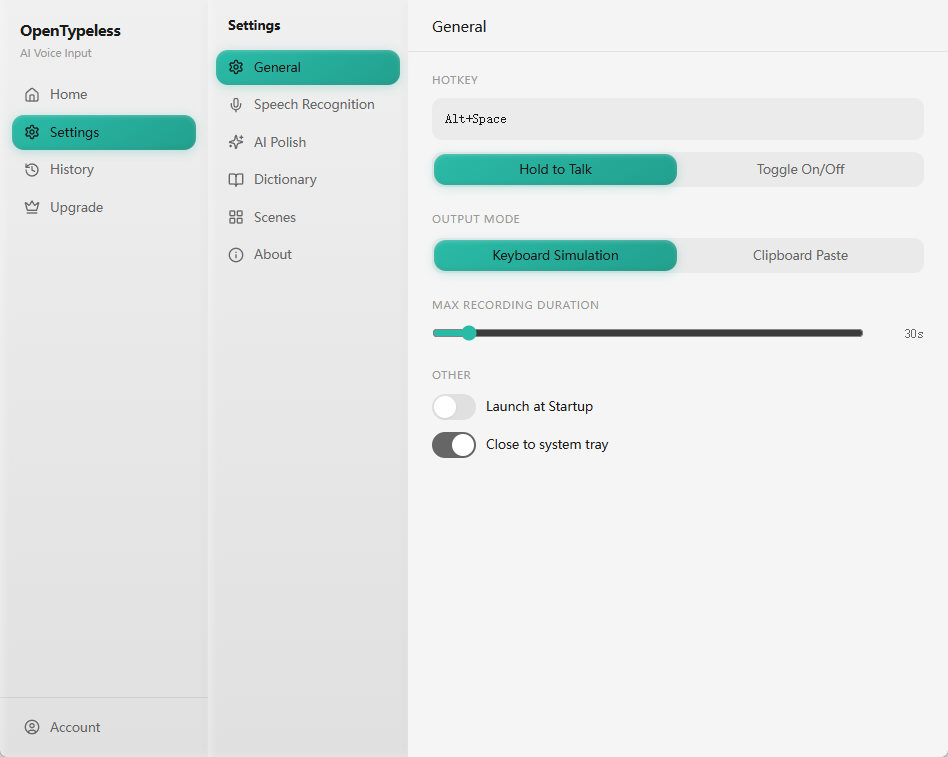
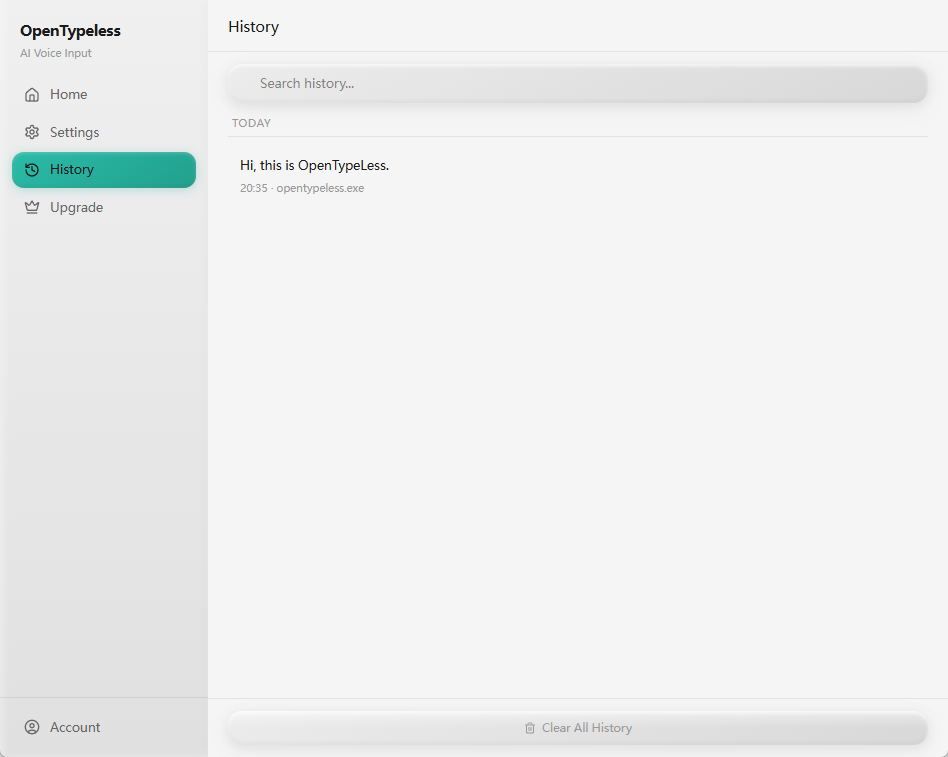
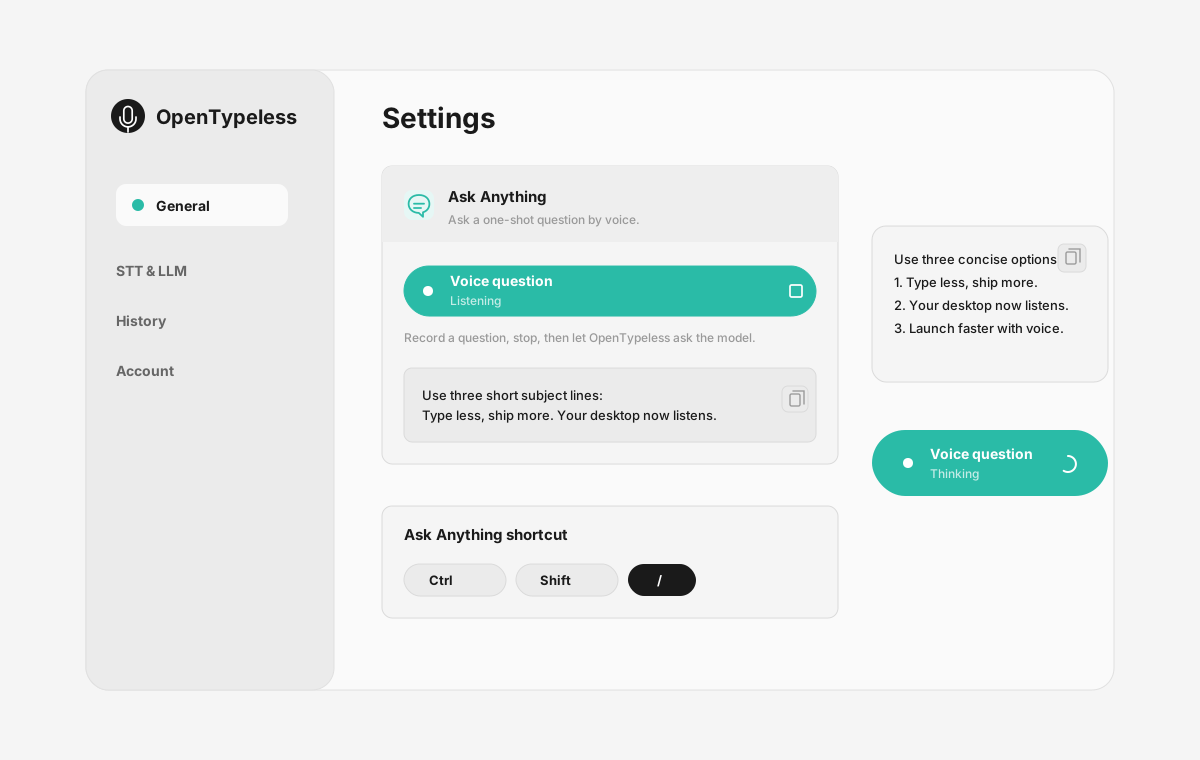
Before comparing feature lists, see the product UI states users touch when switching from Windows Voice Typing.
| Stage | Evidence | Why it matters |
|---|---|---|
| Desktop capture | A visible recording surface instead of a generic feature claim. | Users comparing Windows Voice Typing can see where OpenTypeless fits into daily typing. |
| Provider control | Settings expose STT and LLM choices in one place. | The page shows the concrete control behind BYOK, local, and cloud workflows. |
| Output review | History gives users a place to check previous voice input results. | This makes the workflow feel inspectable instead of a one-shot black box. |
| Ask Anything | A small floating answer note handles voice questions without opening a chat app. | Users can compare not only dictation, but the second workflow: ask by voice and read the result. |
Compare the same writing task
Match your platform, transcript, correction time, and data requirements before choosing.
- Use the same device, microphone, passage, language, and editable field in both products.
- Compare the usable final transcript after punctuation, terminology, and correction work; raw recognition speed alone is insufficient.
- Record the models and plans used. Include provider charges, setup time, and any required network or local-model configuration.
- Check where audio and transcript text are sent separately, and choose the workflow that meets your requirements.
Official documentation checked 2026-10-08. Edition and configuration limits are stated per row. No controlled speed or accuracy winner is claimed.
Feature Comparison
OpenTypeless vs Windows Voice Typing
| Feature | OpenTypeless | Windows Voice Typing |
|---|---|---|
| Price and plan | MIT desktop app; provider and managed-service costs are separate | Built into Windows; the guide does not require a separate dictation appSource |
| Platform | Windows / macOS / Linux | Windows 11 voice typing; Windows 10 dictation is documented separatelySource |
| Source and license | MIT License | A Windows feature; a user-selectable source license is not documentedSource |
| Speech recognition | 7 named BYOK STT providers | Azure-powered online recognition, started with Windows + H in a text boxSource |
| Text processing | 11 providers (BYOK) | Dictation and punctuation controls; no configurable LLM provider in this guideSource |
| Languages | 99 languages | Install the required voice-typing language through Windows language settingsSource |
| Custom vocabulary | Yes | Editing commands are documented; custom vocabulary is not established hereSource |
| Data and processing route | A Custom Whisper-compatible endpoint is the local or self-hosted STT path; whether audio leaves the machine depends on the configured endpoint and network. Ollama is a local LLM provider for text polishing and other LLM work. | An internet connection and working microphone are requiredSource |
| Primary workflow | Desktop dictation, optional transcript polishing, insertion, and one-off voice questions | Text entry; Windows Voice Access serves the broader computer-control taskSource |
Choose by workflow
Start with Windows + H for built-in text entry. OpenTypeless adds configurable provider and polishing routes. Neither comparison should confuse Windows voice typing with Voice Access for hands-free control.
Speech recognition route
Azure-powered online recognition, started with Windows + H in a text box
Text processing
Dictation and punctuation controls; no configurable LLM provider in this guide
Source and license
A Windows feature; a user-selectable source license is not documented
Platform fit
Windows 11 voice typing; Windows 10 dictation is documented separately
Switching from Windows Voice Typing
Quick Migration
Start with Windows + H for built-in text entry. OpenTypeless adds configurable provider and polishing routes. Neither comparison should confuse Windows voice typing with Voice Access for hands-free control.
When Windows Voice Typing fits
We respect the competition
Text entry; Windows Voice Access serves the broader computer-control task
Azure-powered online recognition, started with Windows + H in a text box
Start with Windows + H for built-in text entry. OpenTypeless adds configurable provider and polishing routes. Neither comparison should confuse Windows voice typing with Voice Access for hands-free control.
Related setup guides
More practical guides for the same voice input workflow.
Windows voice typing setup
A Windows-focused guide for hotkeys, STT providers, AI polishing, and custom vocabulary.
Read guideVoice typing in any app
Why a desktop voice input workflow can go beyond one browser extension.
Read guideOpen-source dictation app
How provider choice, local options, and open source change the trust model.
Read guideFrequently Asked Questions
When should I choose Windows Voice Typing?
Start with Windows + H for built-in text entry. OpenTypeless adds configurable provider and polishing routes. Neither comparison should confuse Windows voice typing with Voice Access for hands-free control.
What does Windows Voice Typing cost?
Built into Windows; the guide does not require a separate dictation app
Where can I use Windows Voice Typing?
Windows 11 voice typing; Windows 10 dictation is documented separately
How should I compare the data path?
An internet connection and working microphone are required. A Custom Whisper-compatible endpoint is the local or self-hosted STT path; whether audio leaves the machine depends on the configured endpoint and network. Ollama is a local LLM provider for text polishing and other LLM work.
Ready to Try OpenTypeless?
Free, open-source, and works on Windows, macOS, and Linux. Set up in under 5 minutes.