Voice Control Mac and OpenTypeless: choose the right workflow
Keep Voice Control or Talon for navigation, clicking, and hands-free computer operation. OpenTypeless can be a separate writing-input workflow. It does not replace the full accessibility control system.
See It In Action
OpenTypeless product UI
Before comparing feature lists, see the product UI states users touch when switching from Voice Control Mac.
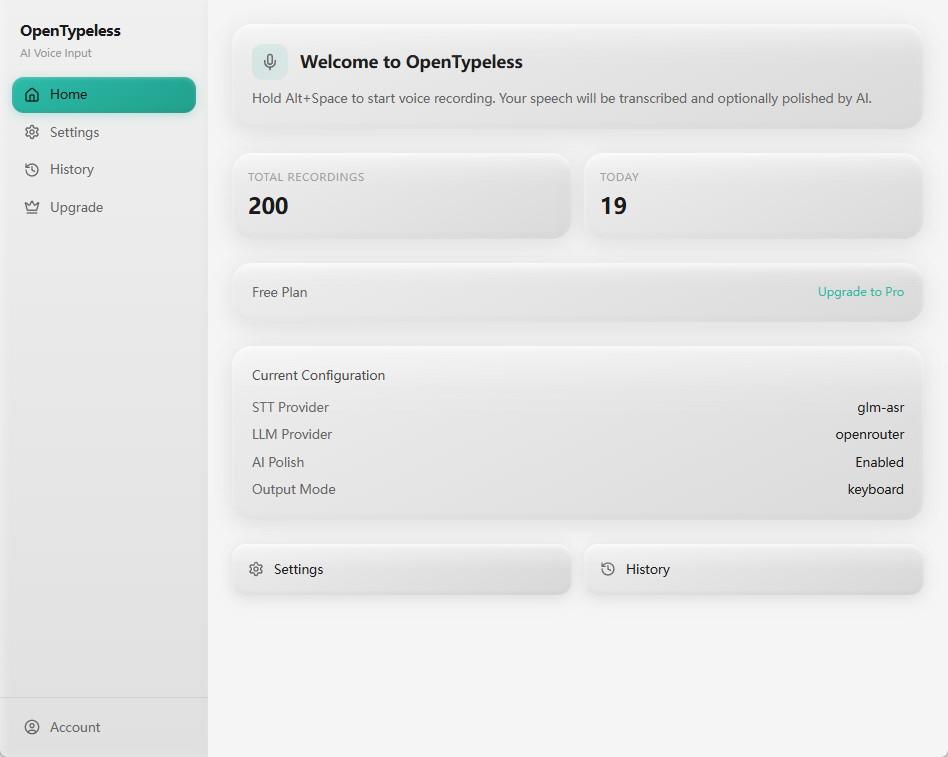
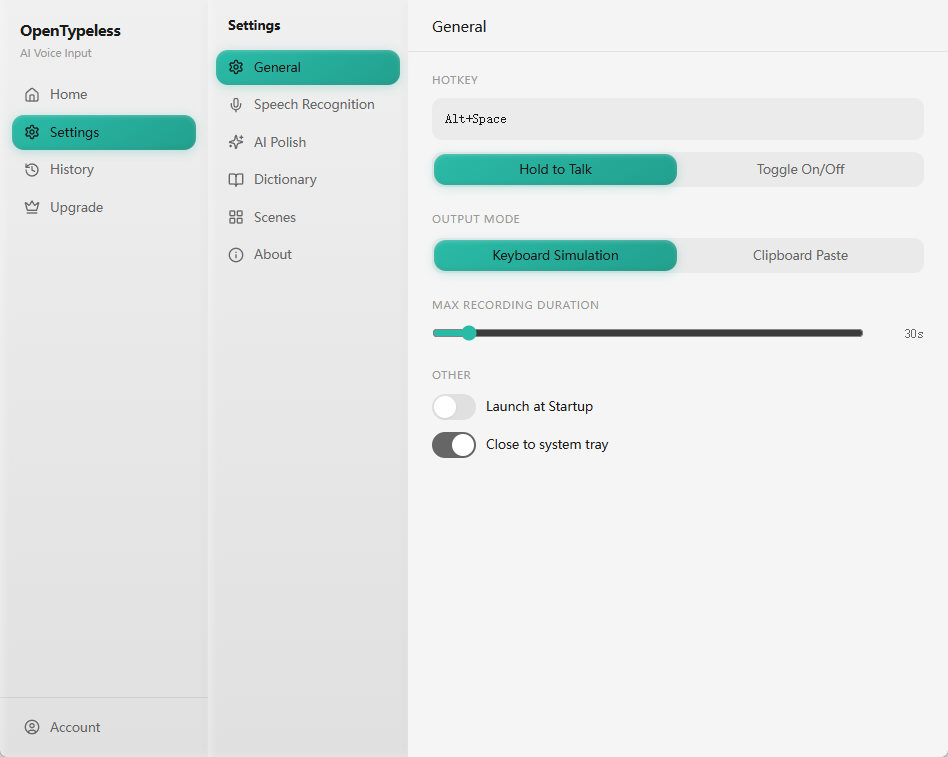
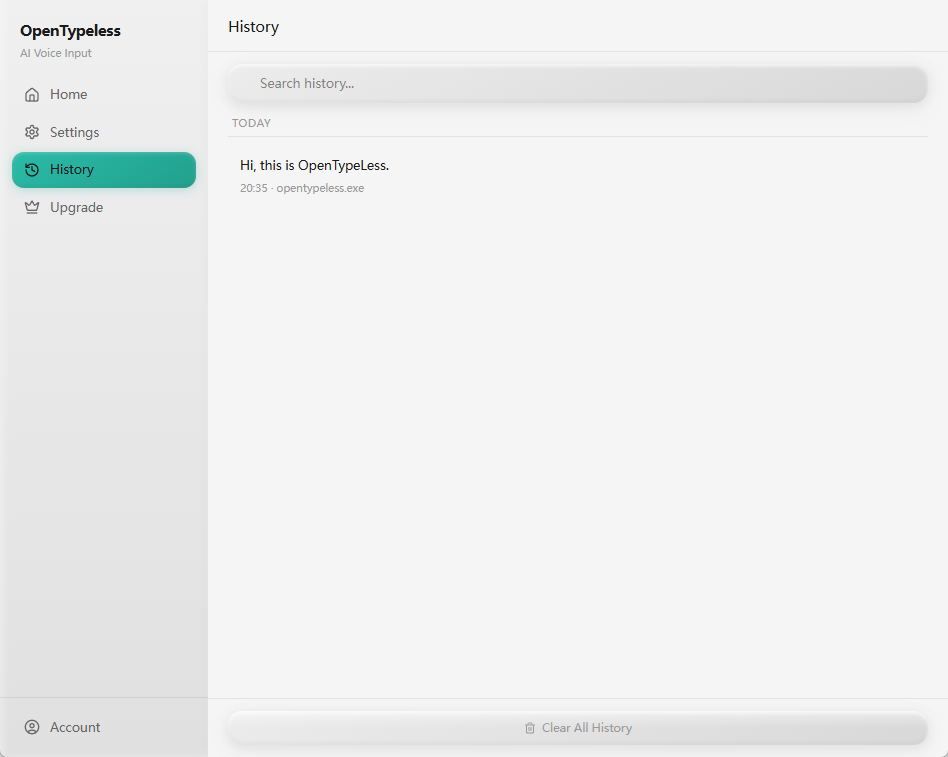
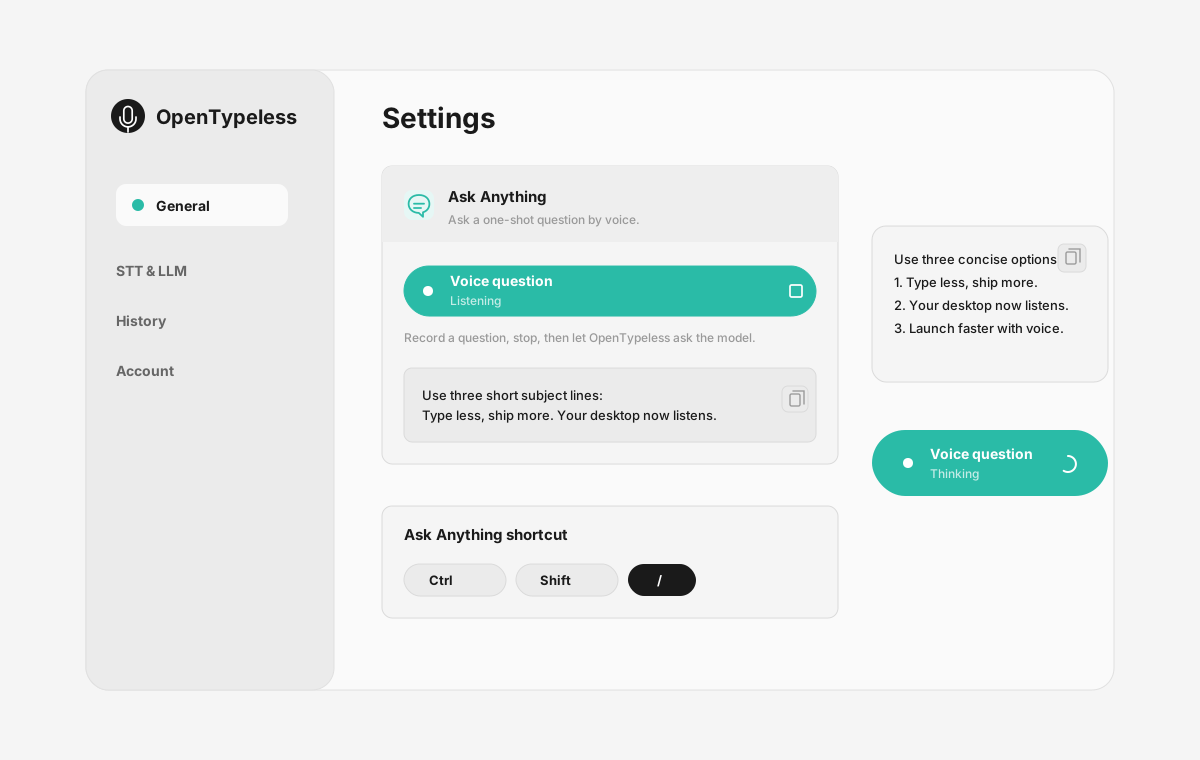
| Stage | Evidence | Why it matters |
|---|---|---|
| Desktop capture | A visible recording surface instead of a generic feature claim. | Users comparing Voice Control Mac can see where OpenTypeless fits into daily typing. |
| Provider control | Settings expose STT and LLM choices in one place. | The page shows the concrete control behind BYOK, local, and cloud workflows. |
| Output review | History gives users a place to check previous voice input results. | This makes the workflow feel inspectable instead of a one-shot black box. |
| Ask Anything | A small floating answer note handles voice questions without opening a chat app. | Users can compare not only dictation, but the second workflow: ask by voice and read the result. |
Choose the required task
Keep Voice Control or Talon for navigation, clicking, and hands-free computer operation. OpenTypeless can be a separate writing-input workflow. It does not replace the full accessibility control system.
- Hands-free desktop navigation, screen interaction, dictation, and editing
- Keep the existing product for narration, marketing production, meeting capture, or hands-free computer control when that is the required task.
- Use OpenTypeless for desktop text input only when that separate workflow is useful. Configure speech recognition and optional transcript polishing independently.
- Check the selected product and edition against the actual required output, and inspect its data route before connecting it to daily work.
Official documentation checked 2026-10-08. Edition and configuration limits are stated per row. No controlled speed or accuracy winner is claimed.
Feature Comparison
OpenTypeless vs Voice Control Mac
| Feature | OpenTypeless | Voice Control Mac |
|---|---|---|
| Price and plan | MIT desktop app; provider and managed-service costs are separate | An included macOS accessibility featureSource |
| Platform | Windows / macOS / Linux | Mac desktop and application navigationSource |
| Source and license | MIT License | A macOS feature; this guide does not publish a standalone app source licenseSource |
| Speech recognition | 7 named BYOK STT providers | Voice commands plus text dictationSource |
| Text processing | 11 providers (BYOK) | Text editing and computer interaction; arbitrary LLM routing is a different taskSource |
| Languages | 99 languages | Availability depends on the chosen Voice Control languageSource |
| Custom vocabulary | Yes | Commands and vocabulary can be customized in Voice Control settingsSource |
| Data and processing route | A Custom Whisper-compatible endpoint is the local or self-hosted STT path; whether audio leaves the machine depends on the configured endpoint and network. Ollama is a local LLM provider for text polishing and other LLM work. | Initial setup can require a download; assess the specific language and configurationSource |
| Primary workflow | Desktop dictation, optional transcript polishing, insertion, and one-off voice questions | Hands-free desktop navigation, screen interaction, dictation, and editingSource |
Choose by workflow
Keep Voice Control or Talon for navigation, clicking, and hands-free computer operation. OpenTypeless can be a separate writing-input workflow. It does not replace the full accessibility control system.
Speech recognition route
Voice commands plus text dictation
Text processing
Text editing and computer interaction; arbitrary LLM routing is a different task
Source and license
A macOS feature; this guide does not publish a standalone app source license
Platform fit
Mac desktop and application navigation
Switching from Voice Control Mac
Quick Migration
Keep Voice Control or Talon for navigation, clicking, and hands-free computer operation. OpenTypeless can be a separate writing-input workflow. It does not replace the full accessibility control system.
When macOS Voice Control fits
We respect the competition
Hands-free desktop navigation, screen interaction, dictation, and editing
Voice commands plus text dictation
Keep Voice Control or Talon for navigation, clicking, and hands-free computer operation. OpenTypeless can be a separate writing-input workflow. It does not replace the full accessibility control system.
Related setup guides
More practical guides for the same voice input workflow.
Mac speech to text setup
A Mac-focused guide covering the Fn dictation shortcut, built-in Dictation tradeoffs, and permissions.
Read guideVoice typing in any app
Why a desktop voice input workflow can go beyond one browser extension.
Read guideOpen-source dictation app
How provider choice, local options, and open source change the trust model.
Read guideFrequently Asked Questions
When should I choose macOS Voice Control?
Keep Voice Control or Talon for navigation, clicking, and hands-free computer operation. OpenTypeless can be a separate writing-input workflow. It does not replace the full accessibility control system.
What does macOS Voice Control cost?
An included macOS accessibility feature
Where can I use macOS Voice Control?
Mac desktop and application navigation
How should I compare the data path?
Initial setup can require a download; assess the specific language and configuration. A Custom Whisper-compatible endpoint is the local or self-hosted STT path; whether audio leaves the machine depends on the configured endpoint and network. Ollama is a local LLM provider for text polishing and other LLM work.
Ready to Try OpenTypeless?
Free, open-source, and works on Windows, macOS, and Linux. Set up in under 5 minutes.
Choose by the primary task
The sourced comparison above separates desktop dictation from the other product’s primary workflow. Keep the existing specialist tool when its narration, meeting, marketing, accessibility, or computer-control features are required.
- Identify the task that cannot be lost when switching.
- Compare the documented feature for that task, not unrelated provider counts.
- Keep a working fallback while testing text insertion in a non-sensitive field.