Best AI Voice Assistants for Desktop Work
The useful desktop AI voice assistant is the one that fits your actual work: asking one-off questions, dictating prompts, polishing text, or staying inside your current app.
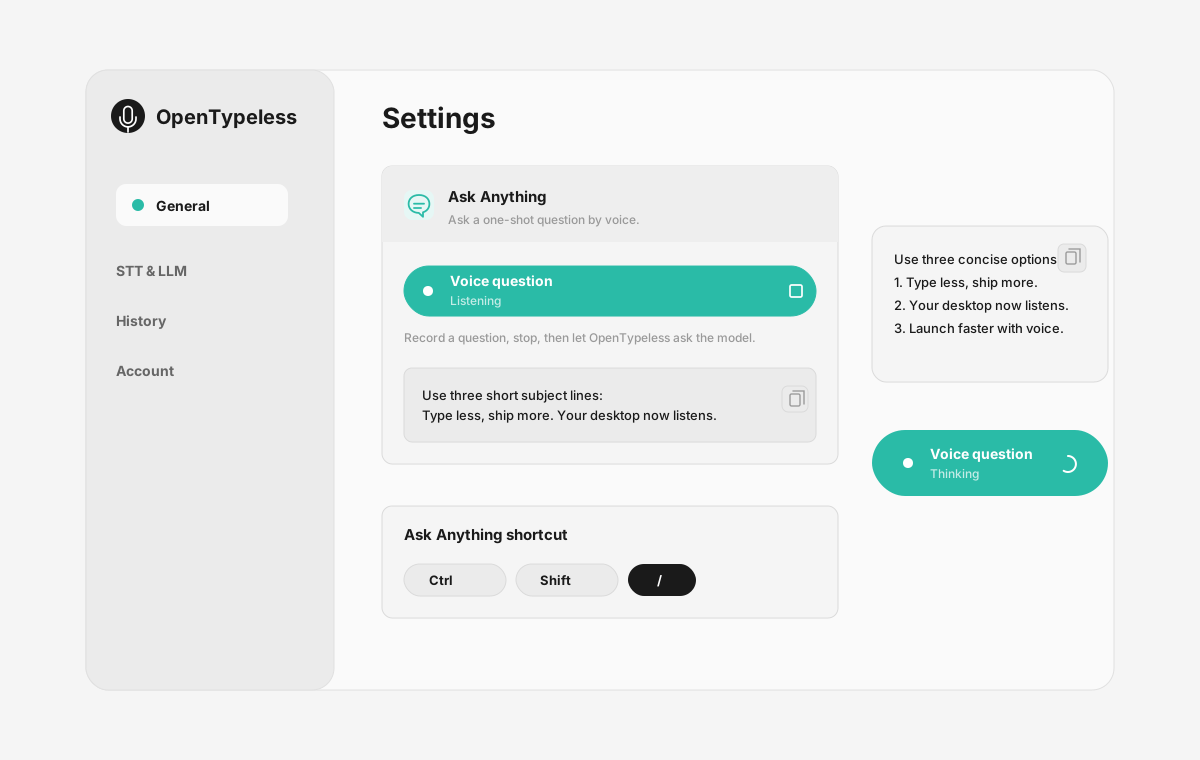
Choose a desktop AI voice assistant by workflow. OpenTypeless Ask Anything is best for one-off spoken questions and answer-only results; chat apps are better for long conversations; dictation tools are better for inserting polished text.
Reviewed with competitor sitemap and Semrush/GSC research on 2026-06-30.
How to decide
Choose based on the job, not only the keyword.
Choose by switching reason
A useful alternatives page should not pretend every product is the same. Pick based on platform, privacy, provider control, AI workflow, and budget.
Look for real product proof
Screenshots, setup docs, pricing clarity, and support pages matter more than generic claims about productivity.
Avoid thin listicles
This roundup links into deeper comparison and setup pages so users can continue the search journey.
Best-fit options
Use these cards as starting points, then read the linked comparison or setup page for more detail.
OpenTypeless Ask Anything
Best when you want to record a question, transcribe it, send it to your model, and see only the result without opening a long chat thread.
ChatGPT voice workflows
Useful for longer conversations. OpenTypeless is a better fit when you need desktop insertion plus quick voice Q&A around your current app.
Claude voice prompt workflows
Good for drafting long instructions by voice before sending them to Claude or Claude Code.
Wispr Flow
A strong commercial option for users who prefer a managed product and do not need OpenTypeless-style open-source control.
Product-specific details
Each section is written around a distinct user job so the page does not become a thin keyword variant.
How this list was evaluated
The evaluation focuses on product-fit criteria that matter for OpenTypeless users: desktop workflow, platform support, provider choice, local/private options, Ask Anything-style AI workflows, and cost clarity.
This page avoids fake ratings and unsupported review claims. Competitor-sensitive details should be reviewed periodically because pricing, platform support, and feature names can change.
Why OpenTypeless belongs on the list
OpenTypeless is open source and built around a repeatable desktop workflow: press a hotkey, speak, transcribe, polish, and insert or ask a one-off question by voice.
That makes it especially relevant for users who want control over STT and LLM providers instead of being locked into a single hosted path.
When a roundup is not enough
A list can narrow the field, but users should still test their own microphone, accent, vocabulary, operating system, and provider route before switching daily workflows.
If desktop AI voice assistants already fits a user perfectly, the safer next step may be to compare one or two specific pain points rather than migrate because of a generic ranking table.
Quick decision table
Start with the job you need the product to do.
| Decision point | Option | What to know |
|---|---|---|
| Need open source and cross-platform support | Best fit | OpenTypeless. |
| Why | It is designed for Windows, macOS, Linux, provider choice, and inspectable source. | |
| Need the most managed commercial experience | Best fit | desktop AI voice assistants |
| Why | A managed commercial product may be better if you prefer fewer setup decisions. | |
| Need AI answers by voice | Best fit | OpenTypeless Ask Anything. |
| Why | It records a one-off voice question and shows the answer in a focused result panel. |
How to compare the tools
Use the same practical checklist for every product before switching your daily voice input workflow.
Check platform fit
Confirm whether the product supports the operating systems you actually use.
Check provider control
Look for BYOK, local/private options, and clear hosted cloud pricing.
Test real writing
Try a long email, a coding prompt, a note, and a quick Ask Anything-style question.
Review limits
Compare quota, pricing, support, and privacy before committing.
FAQ
Short answers for users comparing tools and workflows.
What is the best desktop AI voice assistants alternative?
OpenTypeless is a strong option if you want open-source code, cross-platform desktop support, BYOK providers, AI polishing, and Ask Anything. The best choice depends on your platform and workflow.
Are these tools free?
Some tools have free tiers or open-source code, but hosted speech-to-text and LLM providers can still create usage costs. Always check pricing and quota behavior.
Why does provider choice matter?
Provider choice lets you optimize for latency, accuracy, language support, privacy, and cost instead of replacing your whole workflow when one provider is not ideal.
Should I choose local or cloud speech-to-text?
Cloud can be easier and faster to start. Local/private paths can be better when privacy, control, or offline behavior matters, but they may require more setup.
Related pages
Continue through the strongest internal-link path.
Try the desktop voice input workflow
Start with the default setup, then tune providers, shortcuts, local mode, and Ask Anything as your workflow becomes clearer.